

Your Shopping Cart
-

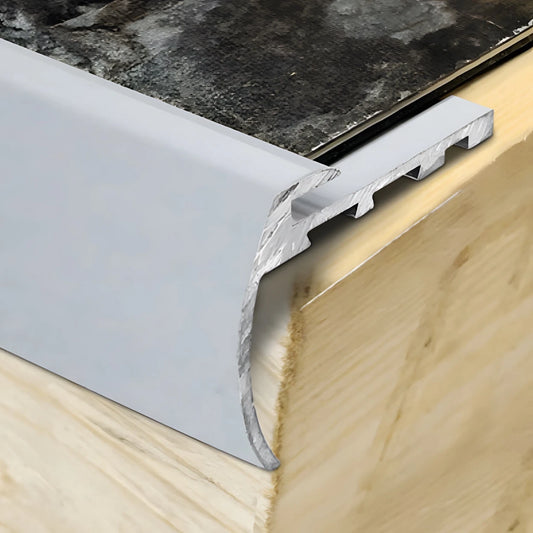
Aluminium Nosing 37x5mm Curved Bullnose LVT Step Edge 2.7m Matt Silver Anodised
Matt Silver Finish 2.7 Metre Length Aluminium Stair Nosing 37mm × 5mm Curved Bullnose Profile Designed for LVT Step Edges with a Neat Anodised Finish Curved Bullnose Profile for LVT Step Edges A stair edge needs a trim that follows the shape of the step while providing a clean transition between the tread and exposed edge. This aluminium stair nosing features a 37mm × 5mm...Regular price £176.75Regular priceUnit price per -

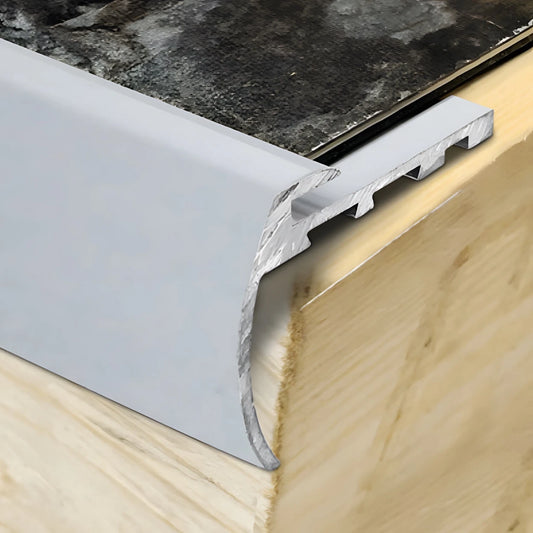
Aluminium Stair Nosing Curved Bullnose Brushed Silver 37x5mm 2.7m LVT Fixings UK
• Curved Bullnose Profile• Brushed Silver Finish• Aluminium AA 6063 T6 Construction• 37 x 5mm Profile for Defined Step Edges• 2.7m Length for Longer Stair Installation Runs A Clean Curved Finish for Stair Edges This curved bullnose stair nosing is designed to provide a neat finishing edge where flooring meets the front of a stair tread. Its rounded profile creates a smoother transition at the...Regular price £195.82Regular priceUnit price per -

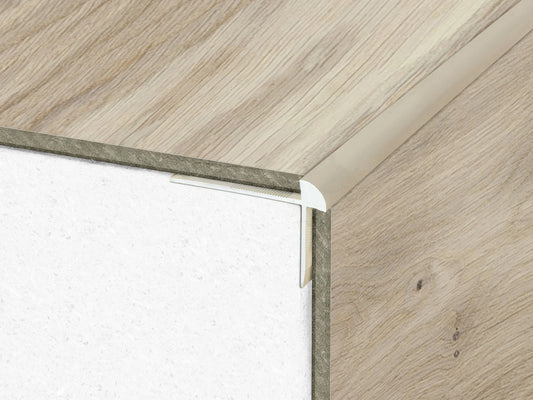
LVT 5mm Stair Nosing Aluminium Outer Corner Vinyl Flooring Edge Profile C29 Trim
• LVT Stair Nosing • Aluminium Profile • Outer Corner Trim • 900mm Length with 42mm Width • Screw-Fix Profile for LVT and Vinyl Stair Edge Applications A Practical Outer Corner Profile for LVT Stair Edges An outer corner is one of the areas where a stair installation needs a clean and consistent transition. When LVT or vinyl is installed around a stair edge, an...Regular price £26.56Regular priceUnit price per -

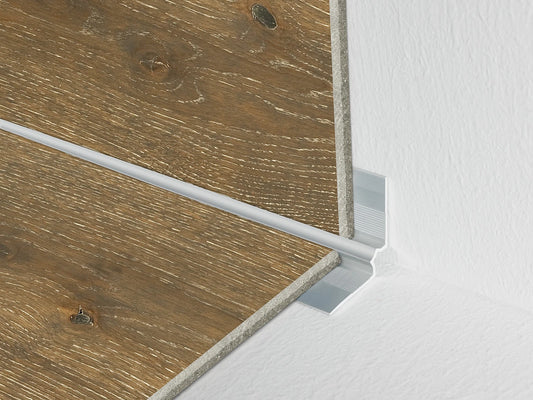
Luxury Vinyl Flooring Trim LVT C31 – Stair Nosing Edge Profile Internal Corner
• Aluminium Construction • Matt Finish • 28 x 28mm Profile • 900mm Stair Edge Trim for LVT Applications • Internal Corner Profile for Creating a Neat Transition Around Stair Edges A Clean Internal Corner Profile for LVT Stair Areas When LVT is installed around stairs, the internal corners and exposed transitions require careful finishing. A suitable edge profile can help create a cleaner connection...Regular price £23.96Regular priceUnit price per -

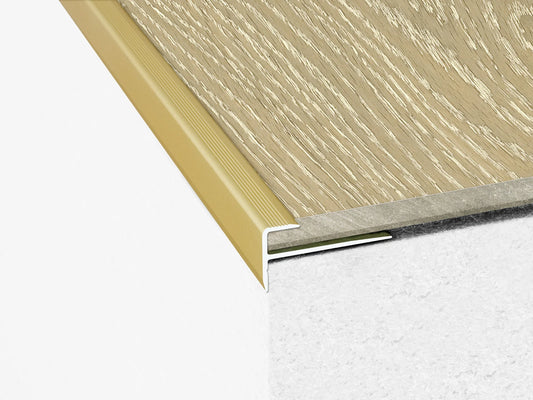
Luxury Click Vinyl Flooring Stair Nosing Edge Profile Trim LVT C24 Push-In 900mm
• Aluminium Construction • Matt Finish • Push-In Installation • 900mm Straight-Edge Profile for LVT Stair Edges • Modern Stair Nosing Designed for Suitable Click Vinyl Stair Installations A Clean Edge Profile for Click Vinyl Stairs The front edge of an LVT staircase needs a finishing detail that works with the surrounding surface while providing a neat visual transition. An appropriate stair nosing can help...Regular price £23.96Regular priceUnit price per -

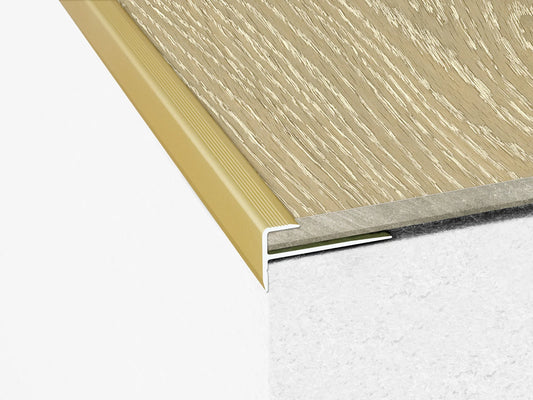
2.7m LUXURY CLICK VINYL FLOORING PUSH-IN STAIR NOSING EDGE PROFILE TRIM LVT C24
• Anodised Aluminium• 2.7m Stair Profile• 28 x 14.5 x 8mm Profile Size• Screw-Fix Installation for a Secure Edge Finish• Modern LVT Stair Trim Designed for Suitable Click Vinyl Applications A Defined Edge for Click Vinyl Stair Installations Installing click vinyl or LVT on stairs requires careful attention to the exposed front edge. Unlike a flat floor, a staircase has repeated changes in direction and...Regular price £44.97Regular priceUnit price per -

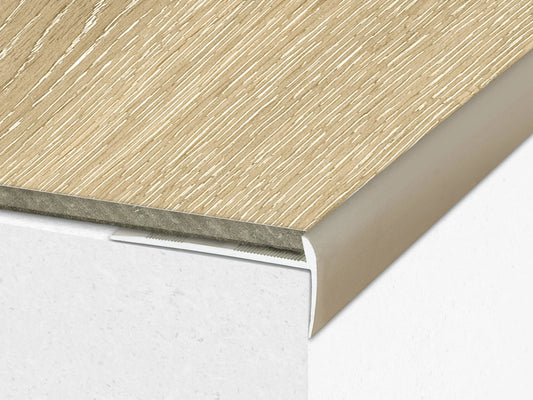
2.7m LUXURY CLICK VINYL FLOORING STAIR NOSING EDGE PROFILE TRIM LVT C27
• Anodised Aluminium • 2.7m Stair Edge Profile • 44 x 20.5mm Profile Size • Screw-Fix Design for Secure Installation • Suitable for Click Vinyl and LVT Stair Edges with a Clean Modern Finish A Refined Edge Profile for Click Vinyl Stairs Stair edges need more than a neat appearance. The transition between the tread surface and the front edge needs to be considered carefully,...Regular price £44.97Regular priceUnit price per -

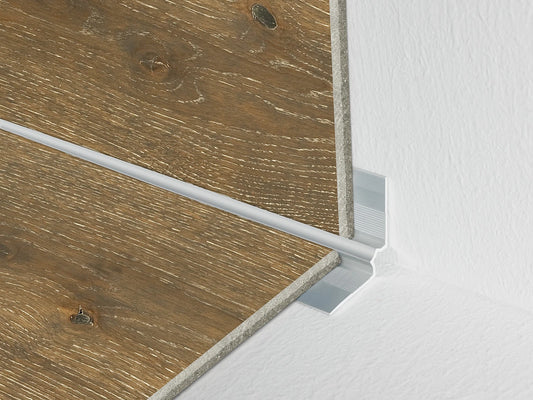
2.7m LUXURY CLICK VINYL FLOORING STAIR NOSING EDGE PROFILE TRIM LVT C31
• LVT Profile • 2.7m Length • Anodised Aluminium Construction • 28 x 28 x 5mm Stair Edge Profile with Matt Finish • Screw-Fix Nosing Designed for Suitable LVT Stair Installations and Long Edge Coverage Extended LVT Stair Nosing for a Clean Edge Finish A staircase finished with LVT needs careful attention at the exposed front of each tread. Without an appropriate edge profile, the...Regular price £41.97Regular priceUnit price per -

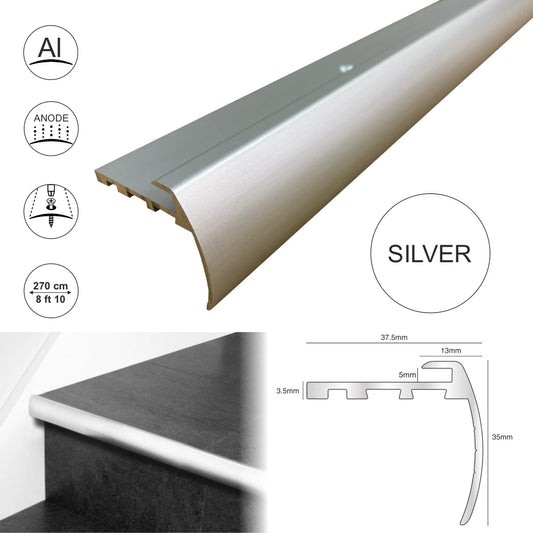
2.7m ALUMINIUM BULL NOSE STAIR NOSING STAIR EDGE PROFILE EDGING TRIM FOR 5MM LVT
• Bull Nose Stair Nosing• 2.7m Aluminium Profile• Screw-Fix Installation• 37.5 x 35 x 13mm Profile for 5mm LVT• Anodised Aluminium Construction with a Matt Finish for a Defined Stair Edge A Purpose-Built Edge Profile for LVT Stairs When LVT is installed on stairs, the front edge needs to be finished in a way that works with both the flooring thickness and the shape of...Regular price £99.98Regular priceUnit price per -

LVT INNER CORNER 90 cm 35.49'' 3 mm VINYL FLOORING STAIR NOSING EDGE PROFILE
3mm LVT Inner Corner 90cm Profile Length Matt Silver Finish For Vinyl Flooring Compact Inner Corner Profile for Creating a Neat, Consistent Edge Finish Around 3mm LVT and Vinyl Flooring Inner Corner Finishing for 3mm LVT Flooring This 90cm LVT inner corner profile is designed for finishing internal corner areas associated with 3mm vinyl flooring. It provides a dedicated profile where flooring meets an inward-facing...Regular price £17.96Regular priceUnit price per -

LVT STAIR NOSING 3mm - 250 cm / 98.43'' VINYL FLOORING STAIR EDGE PROFILE TRIM
3mm LVT Stair Nosing 250cm Length Matt Silver Finish For Vinyl Flooring Long Stair Edge Profile for Creating a Neat, Consistent Finish on 3mm LVT and Vinyl Flooring Steps Stair Edge Finishing for LVT and Vinyl Flooring This 250cm LVT stair nosing profile is designed to provide a finished edge around steps covered with 3mm vinyl flooring. It creates a dedicated transition at the front...Regular price £35.97Regular priceUnit price per -

LVT INNER CORNER 5mm - 250 cm 98.42'' VINYL FLOORING STAIR NOSING EDGE PROFILE
5mm LVT Inner Corner 250cm Length Indoor Profile For Vinyl Flooring Edges Long Inner Corner Profile for Neat Finishing Around 5mm LVT and Vinyl Flooring Installations Inner Corner Finishing for LVT Flooring This 250cm LVT inner corner profile is designed for finishing internal corners where 5mm vinyl flooring is being installed. It provides a practical edge solution for areas where the flooring meets an internal...Regular price £38.97Regular priceUnit price per -

LVT INNER CORNER 3mm-250 cm / 98.42'' VINYL FLOORING STAIR NOSING EDGE PROFILE
3mm LVT Inner Corner 250cm Length Matt Silver Finish Designed for Vinyl Flooring Edges Long Inner Corner Profile for Creating a Neat, Consistent Finish Around LVT and Vinyl Flooring Projects A Practical Inner Corner Profile for LVT Flooring This 250cm LVT inner corner profile is designed for projects using 3mm vinyl flooring where a clean finish is needed around an internal corner. Rather than leaving...Regular price £38.97Regular priceUnit price per -

LVT OUTER CORNER 5 mm- 250 cm / 98.43'' VINYL FLOORING STAIR NOSING EDGE PROFILE
LVT Outer Corner Profile 250cm Long Profile 5mm Vinyl Flooring Fit Matt Silver Finish Easy-to-Install and Replaceable Edge Profile for Suitable LVT and Vinyl Flooring Projects Outer Corner Profile for LVT and Vinyl Flooring An outer corner is one of the areas where a flooring installation can require a dedicated finishing profile. When LVT or vinyl flooring reaches an exposed external corner, achieving a clean...Regular price £53.97Regular priceUnit price per -

LVT OUTER CORNER 90 cm 35.49'' 5 mm VINYL FLOORING STAIR NOSING EDGE PROFILE
LVT Outer Corner Profile 90cm Length 5mm Vinyl Flooring Fit Matt Silver Finish Easy-to-Install Outer Corner Profile for Suitable LVT and Vinyl Flooring Applications Outer Corner Finishing for LVT Flooring An outer corner requires a suitable finishing profile when LVT or vinyl flooring reaches an exposed change of direction. Without an appropriate edge treatment, these areas can be more difficult to finish neatly and consistently....Regular price £25.96Regular priceUnit price per


LVT Stair Edge Profiles for a Clean, Accurate Floor Finish
Luxury vinyl tile needs a stair nosing that works with the complete floor build-up, not just the visible plank or tile. LVT thickness, adhesive, underlay and the shape of the tread edge all affect how the finished profile will sit.
A correctly matched LVT stair nose should create a controlled transition at the front of the step without leaving exposed flooring, excessive overlap or a noticeable height difference. Measuring the finished installation before ordering is therefore more important than selecting a profile on appearance alone.
LVT Thickness and Floor Build-Up Determine the Right Profile
LVT systems vary considerably. Dry-back tiles may sit close to the substrate, while click-fit products can create a deeper floor build-up because of their construction or underlay.
When comparing LVT stair nosings, measure every permanent layer between the substrate and finished surface. This provides the actual height the profile needs to accommodate and reduces the risk of ordering a nosing that sits above or below the flooring.
Where a lower transition is needed, a suitable slimline stair nosing can reduce visual bulk around the tread edge, provided its dimensions still give sufficient coverage and fixing space.
The finished thickness establishes the required height; the stair shape then determines which profile geometry will fit correctly.
LVT Stair Nose Profiles for Square and Shaped Tread Edges
The front of the stair should be inspected before the flooring is cut or permanently finished. Square-edged steps usually require a different profile from rounded or projecting tread edges.
A correctly sized profile should sit naturally against the stair rather than being forced into position by screws or adhesive. This becomes particularly important on LVT stairs because a poorly aligned nosing can make small differences in level much more noticeable.
Projects with a clearly formed right-angle tread can benefit from comparing square edge stair nosing where the profile shape corresponds with the existing step construction.
For refurbishment work, remove or account for any previous trim before taking final measurements. Old adhesive, damaged corners or existing fixing holes can alter the usable edge once the replacement profile is installed.
Aluminium Stair Nosing for LVT Installations
Material selection follows once the floor depth and edge shape are established. Aluminium is frequently considered for LVT because its rigid construction can provide a clearly finished tread edge while remaining available in relatively compact profiles.
An aluminium stair nosing should still be selected by dimensions first. A visually suitable aluminium finish is of little value if the section is too deep for the LVT or does not provide the correct coverage over the tread.
Other materials may suit particular installations, but each option should be assessed against traffic level, interior conditions and the underlying stair construction rather than simply matching the colour of the flooring.
Commercial Stair Nosing for High-Use LVT Stairs
LVT is widely used in shops, offices, hospitality spaces and other interiors where flooring appearance and practical maintenance both matter. On these staircases, the nosing specification needs to account for repeated foot traffic as well as the finished floor height.
Commercial stair nosing should provide enough coverage for the intended installation and use a fixing method appropriate to the substrate beneath the LVT. The floor covering itself should not be expected to provide structural support for the profile.
Where wider tread coverage or a different grip arrangement is needed, comparing double channel stair nosing can help determine whether a broader profile is more appropriate for the dimensions and use of the staircase.
Traffic level matters, but it should not override correct fit. A larger profile is not automatically a better commercial specification if it creates an unsuitable transition with the LVT.
LVT Stair Nosing for New Floors and Refurbishment Work
New installations give buyers the advantage of planning the LVT and stair edge together. The profile can be selected before the final cuts are made, making it easier to coordinate floor thickness, overlap and fixing position.
Refurbishment projects require closer inspection. Existing LVT should be securely bonded or locked in place, and damaged tread edges should be repaired before a replacement nosing is measured.
If there is uncertainty about whether the floor is LVT, sheet vinyl or another resilient finish, the wider stair nosing by floor type range helps separate profiles according to the actual flooring construction rather than grouping visually similar surfaces together.
Fixing LVT Stair Nosing Without Compromising the Floor Edge
The installation method depends on the profile and stair substrate. Mechanical fixings, adhesive or a combination of both may be appropriate, but the fixing should engage with a sound surface beneath the decorative flooring.
Before ordering, check where fixing holes sit in relation to the LVT edge. Profiles intended for bonding also need a clean, stable contact area free from loose material or flooring residue.
Once the profile has been selected, compatible stair nosing accessories can be matched to the installation so screws, adhesive or finishing components suit the actual product and substrate.
With the floor build-up, tread shape and fixing method confirmed together, it becomes much easier to order an LVT stair nosing that fits the completed staircase rather than adapting the floor around an unsuitable trim.
Frequently Asked Questions
What stair nosing is suitable for LVT flooring?
The best option is a profile that matches the finished LVT build-up and tread shape. Measure the tile or plank together with adhesive or underlay, then compare that depth with the nosing dimensions before ordering.
Is LVT stair nosing different from vinyl stair nosing?
It can be. LVT planks and tiles may have a different construction and overall thickness from sheet vinyl. Profile suitability should be based on the completed floor build-up rather than treating all vinyl-based flooring as identical.
How do I measure LVT for stair nosing?
Measure from the stair substrate to the top of the finished LVT surface. Include adhesive, underlay or other permanent layers so the profile can be matched to the actual installed height.
Can stair nosing be installed after the LVT is fitted?
Yes, depending on the profile and installation method. The LVT edge must be secure, accurately cut and compatible with the nosing design, while the underlying stair should provide a reliable fixing surface.
Is aluminium stair nosing suitable for LVT stairs?
Aluminium can work well with LVT when the profile depth and shape match the flooring. Check the horizontal coverage, vertical section and fixing arrangement rather than selecting aluminium on finish alone.
What profile works with thin LVT flooring?
A lower-profile nosing may suit thinner installations, but the product still needs sufficient tread coverage and secure fixing. Compare the complete dimensions with the actual LVT build-up before purchasing.
Can LVT stair nosing be used in commercial buildings?
Yes, suitable profiles can be used on commercial LVT stairs. Consider expected traffic, substrate condition, profile construction and fixing method alongside the finished flooring thickness.
Should the LVT run underneath the stair nosing?
That depends on the profile design. Some products overlap the LVT, while others meet it at a defined edge. Confirm the intended installation detail before cutting or permanently bonding the flooring.
Can damaged LVT stair edges be covered with new nosing?
Minor edge issues may sometimes be concealed, but loose flooring or damaged substrates should be repaired first. Stair nosing should not be used to compensate for an unstable or poorly prepared tread.
What should I check before ordering LVT stair nosing?
Confirm the finished floor thickness, tread shape, stair width, required coverage, profile material and fixing method. These measurements provide a reliable basis for selecting the correct product.
What Our Customers Says!
★
★
★
★
★
Excellent quality stair nosing with a perfect anti-slip finish. The product arrived quickly and was easy to install. It has made our staircase much safer, especially in high-traffic areas. Highly recommended.
James Wilson
Verified Customer
★
★
★
★
★
I purchased stair nosing for our home renovation project and was impressed with the quality. The finish looks great, feels durable, and provides excellent grip on every step.
Sarah Thompson
Verified Customer
★
★
★
★
★
We regularly use anti-slip stair nosing for commercial projects, and the quality has always been reliable. Strong materials, accurate sizing, and a professional finish make installation straightforward.
Mark Bennett
Verified Customer
★
★
★
★
★
A great solution for improving staircase safety. The stair nosing was exactly as described, well packaged, and delivered on time. The anti-slip surface gives extra confidence for everyone using the stairs.
David Roberts
Verified Customer
★
★
★
★
★
Fantastic product and service. The stair nosing looks smart and blends perfectly with our existing flooring. The added grip has made a noticeable difference.
Emma Collins
Verified Customer
★
★
★
★
★
High-quality stair edging with excellent durability. We installed these in an office building, and they have performed very well even with daily foot traffic.
Michael Harris
Verified Customer
★
★
★
★
★
Very happy with my purchase. The stair nosing was easy to fit, looks professional, and gives our staircase a much safer finish.
Olivia Parker
Verified Customer
★
★
★
★
★
Good range of stair nosing options and excellent product quality. The measurements were accurate, and the installation process was quick and hassle-free.
Daniel Foster
Verified Customer
★
★
★
★
★
The perfect finishing touch for our staircase. The anti-slip insert provides great traction while maintaining a clean modern appearance.
Rebecca Turner
Verified Customer